
NEET 2026 Last 24 Hours Plan: Final Revision, Sleep, and Exam Day Strategy
May 2, 2026
NEET 2026 Answer Key: Download Code Wise PDF, Calculate Score & Know What to Do Next
May 6, 2026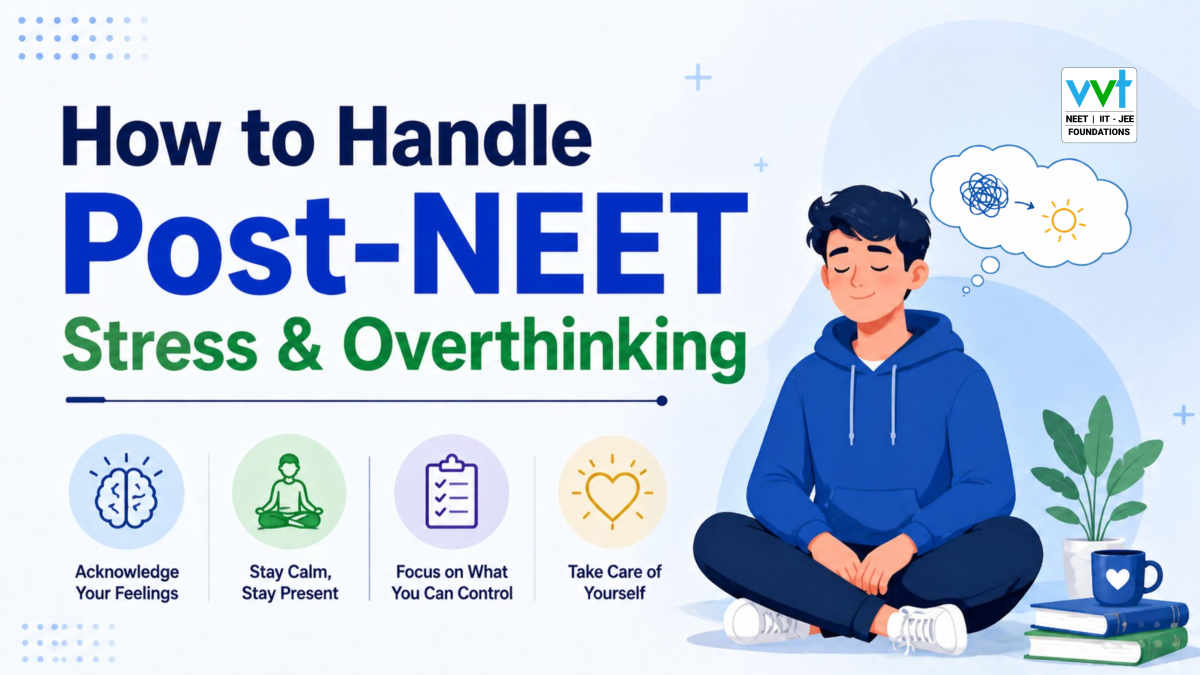
How to Handle Post-NEET Stress & Overthinking
VVT Coaching Chennai – Ranked #1 Best NEET & JEE Coaching Centre by Times Now!
For many students, stress does not end when the NEET paper ends.
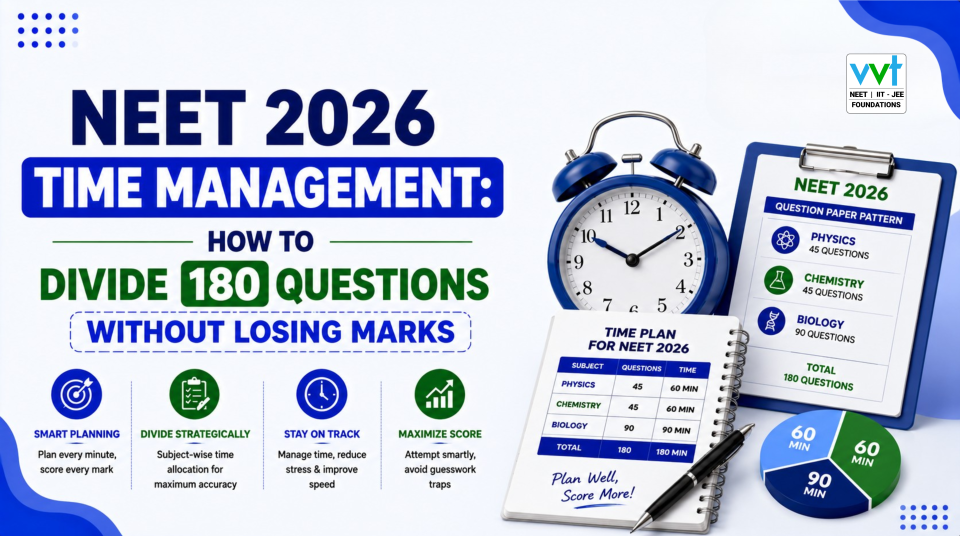
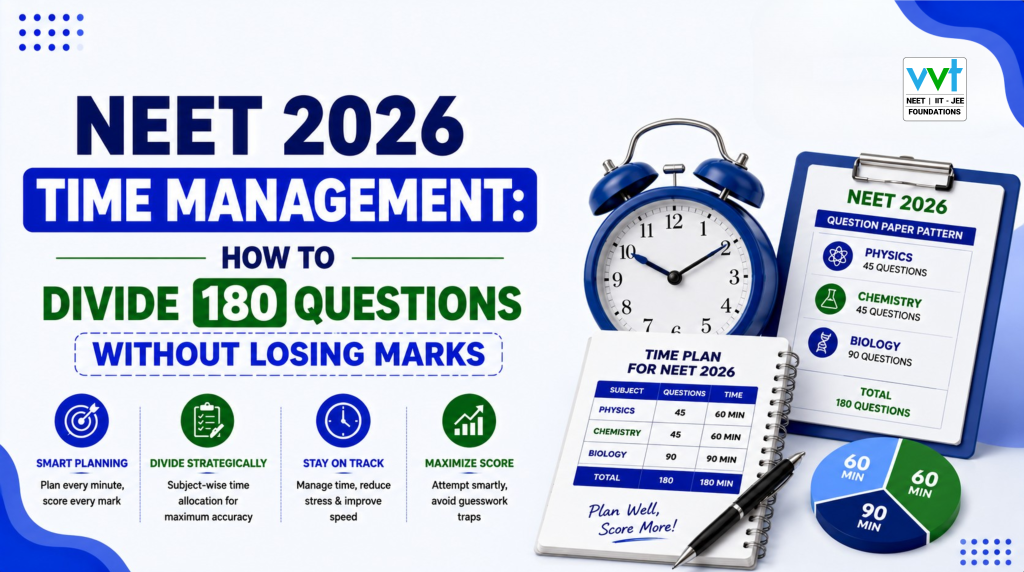
In fact, for some students, the hours after the exam feel even harder. The paper is over, but the mind keeps replaying questions, comparing answers, imagining ranks, fearing the worst, and jumping between hope and panic. That is exactly why post NEET stress is real. And with NEET UG 2026 scheduled for 3 May 2026, this is the right time to prepare for the emotional side of the exam too, not just the academic side. NEET UG 2026 remains a single shift, pen and paper exam with 180 questions in 180 minutes, so it is a high pressure event by design.
The first thing students should hear is this:
Feeling stressed, blank, guilty, restless, or obsessive after an exam is not unusual. NHS guidance on exam stress says nervousness around exams is a normal reaction, and after the exam it helps to talk through what went well and then move on instead of dwelling on what cannot be changed. CDC and NIMH also recommend healthy stress coping methods like taking breaks from constant information, talking to trusted people, getting sleep, exercising, and using calming activities rather than staying trapped in distress cycles.
Why post NEET overthinking becomes so intense
The biggest reason is simple: After the exam, students suddenly lose control over the one thing they were controlling for months of preparation.
Before the exam, every hour of revision feels productive. After the exam, there is no chapter to finish and no mock to correct. That empty space gets filled by overthinking. Students begin asking:
- “Why did I mark that option?”
- “What if that Biology statement was reversed?”
- “What if one small Chemistry mistake changes everything?”
- “What if everyone else found the paper easy?”
That is why post exam stress often feels worse than exam day stress. It is no longer about performance. It becomes about uncertainty.
The first rule after NEET: do not start with answer key obsession
This is one of the biggest post exam mistakes.
Many students walk out of the exam hall and immediately begin discussing every doubtful question. Then they go online, open multiple answer keys, compare unofficial solutions, and become more confused than before. If two sources disagree, panic increases even more.
The problem is not only the answer key. The problem is the emotional state in which students consume it.
A much better first step is:
take a pause, hydrate, eat, rest your body, and only later decide whether checking the paper is actually helping you or only disturbing you.
What students should do in the first few hours after NEET
The most useful first response after the exam is not analysis. It is decompression.
NHS advice on exam stress recommends talking through the parts that went well and then moving on rather than dwelling only on what went badly. CDC recommends taking breaks, making time to unwind, and talking with people you trust. NIMH also recommends sleep, hydration, regular meals, exercise, and reducing overstimulation from screens.
So the first few hours after NEET should look like this:
- get out of the exam mindset,
- avoid long post mortem discussions,
- eat properly,
- rest,
- and let your nervous system settle.
This sounds simple, but it is exactly what stops post NEET stress from turning into full overthinking.
How to stop replaying the paper in your head
This is one of the most common post NEET problems.
Students keep mentally reopening the paper:
- “I should have done Physics later.”
- “That Organic question looked easy after the exam.”
- “I knew that NCERT line. Why didn’t I mark it?”
- “Maybe I made an OMR mistake.”
The hard truth is this, once the exam is over, repeated replay does not improve the score. It only increases emotional fatigue.
That is why one of the best mental rules after NEET is:
review only if it helps you understand your likely range – not if it keeps punishing you.
If checking answers is making you calmer, fine. If it is making you more unstable, stop. That is not weakness. That is self-control.
How VVT Coaching would frame post NEET recovery
If VVT Coaching wants to speak with authority on this topic, the strongest message is not “Don’t worry.”
The stronger message is:
Post NEET stress is best handled by replacing emotional guessing with structured response.
That means:
- do not discuss the whole paper with ten different people,
- do not trust rumours,
- do not let one bad memory erase the whole exam,
- and do not decide your future based on first day panic.
Be careful with rumours after the exam
This is especially important for NEET 2026.
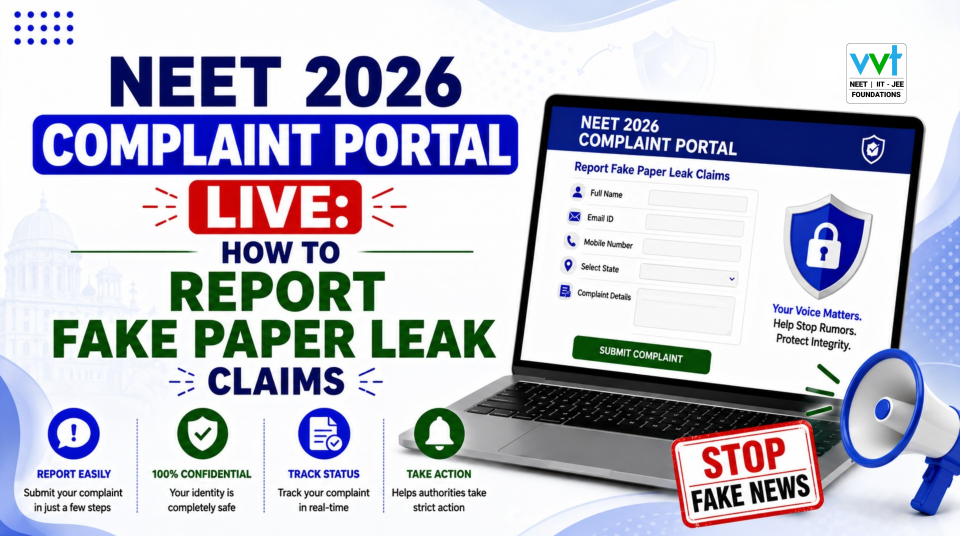
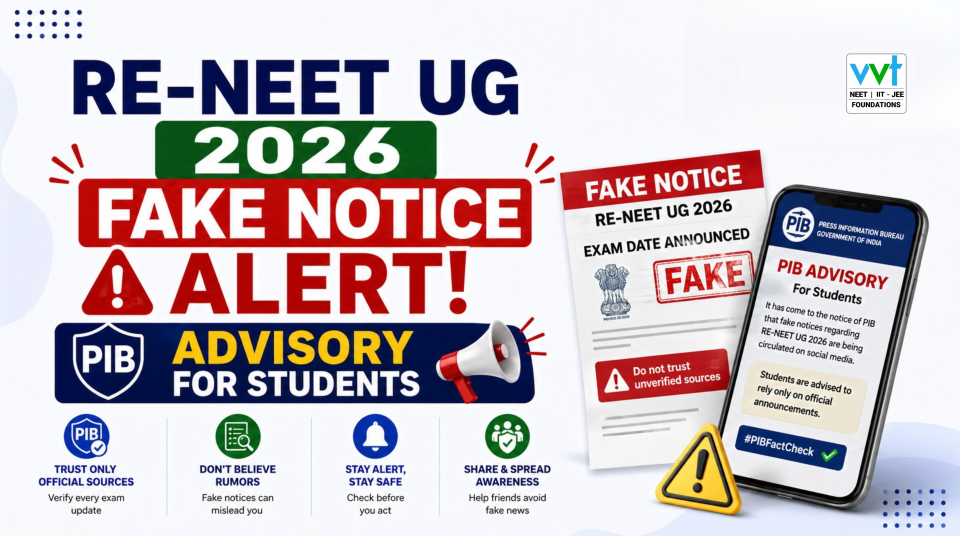
NTA has already warned candidates not to fall for fake paper leak claims and misinformation, and advised students to rely only on official updates and verified channels. That warning matters not just before the exam, but after it too, because rumours make post NEET anxiety much worse.
So after the exam, if your stress is increasing because of social media posts, Telegram messages, or sensational claims, step back. The safest rule is simple:
follow only official updates for anything that affects your actual result.
What to do if you feel guilty after the paper
A lot of students do not just feel stressed they feel guilty.
They think:
- “I wasted my preparation.”
- “I disappointed everyone.”
- “I ruined my chance with one silly section.”
- “If I had just handled the first 30 minutes better, everything would be different.”
This kind of thinking feels intense because the exam matters. But guilt is not the same as truth.
NHS guidance specifically says support should be reassuring and positive, and that after each exam students should focus on what went well and then move forward rather than staying trapped in what cannot be changed.
A better post NEET question is:
What do I know for sure right now?
Usually, the honest answer is:
- the paper is over,
- memory is imperfect,
- unofficial discussions are noisy,
- and the final outcome is not decided by your worst fear.
That one shift reduces a lot of unnecessary suffering.
Also read: When Will NEET 2026 Result Be Declared?
Also read: NEET 2026 Exam Time, Reporting Schedule & Gate Closing Rules | VVT Coaching Centre
Should students calculate their score immediately?
Not always.
Some students feel better after estimating a realistic score range. Others feel much worse. The right move depends on whether score checking is giving you clarity or feeding obsession.
If you do check:
- use one or two reliable sources only,
- do it once,
- write a rough range,
- and stop.
Do not keep recalculating every two hours.
That is not productive analysis. It is stress repetition.
What parents should do after NEET
Parents often care deeply, but in the first few hours after the exam they can unintentionally increase pressure.
NHS guidance for exam stress says support should be calm, non-critical, and focused on helping the student move on instead of reliving every difficult question.
So the best post NEET support from parents is:
- don’t demand a full paper analysis immediately,
- don’t compare your child with others,
- don’t ask, “How many mistakes?”
- and don’t turn the car ride home into an interrogation.
The first gift a parent can give after NEET is emotional space.
What students should do the next day
The next day after NEET should not be chaotic.
CDC and NIMH both recommend restoring basic rhythms, sleep, hydration, food, movement, and reduced stress exposure. Even simple things like walking, resting, journaling, deep breathing, and talking to trusted people can help regulate the nervous system after a high pressure event.
So the day after NEET should include:
- proper sleep recovery,
- reduced social media overload,
- some physical movement,
- and a limited, structured approach to result related checking.
This is not laziness. It is recovery.
When post NEET stress becomes too much
Most students feel some stress after the exam. That is normal.
But if the stress becomes severe for example, if you cannot sleep, cannot eat, cannot stop crying, cannot function normally, or feel stuck in panic for days, that is a sign to seek help. NHS says help should be considered when anxiety or low mood is severe, persists, and interferes with everyday life. NIMH also recommends reaching out for professional help when distress becomes overwhelming or gets in the way of daily functioning.
That means:
- talk to a parent,
- talk to a trusted teacher or mentor,
- talk to a counselor,
- or speak to a doctor if needed.
There is nothing “dramatic” about asking for help after a high stakes exam. It is a healthy response.
Why this matters for NEET 2026
NEET 2026 is happening in an environment where stress is not coming only from the paper itself. It is also coming from rumours, misinformation, social comparison, and extreme score anxiety. NTA’s recent warning against fake paper leak claims shows exactly why students need to protect their minds from noise as much as from doubt.
At VVT Coaching Chennai, the goal is not just to help students prepare for the paper, but to help them handle the pressure around it before, during, and after the exam.
Because in NEET, performance matters. But recovery matters too.
How VVT Coaching Helps Students Handle Post NEET Stress and Overthinking Better
Once NEET is over, the pressure does not end immediately. For many students, it changes form.
Inside the exam hall, the stress is about attempting the paper. After the exam, the stress becomes mental. Students start replaying questions, remembering doubtful answers, comparing attempts with others, and imagining the worst possible result. That is why at VVT Coaching Chennai, we understand that NEET pressure does not stop when the paper ends. Students need support not only before the exam, but also after it.
Because in NEET, stress after the paper usually comes from one painful thought:
“Did I lose marks that I could have protected?”
Error Exams – Reduce the regret that comes from repeated mistakes
A lot of post-NEET overthinking happens because students feel they made the same mistakes again.
They begin thinking about:
- getting stuck in lengthy Physics questions
- misreading Biology statements
- making sign or unit mistakes in Chemistry
- skipping familiar questions due to pressure
- losing marks in questions they usually know well
That is exactly why VVT uses Error Exams during preparation. These are built from the student’s own repeated mistakes so that familiar error patterns are corrected before the real exam.
Instead of giving only more random papers, VVT helps students repeatedly fix the exact types of mistakes that later become the reason for regret and overthinking.
Result: students feel more confident after the exam because they know they went in with better correction, better control, and fewer repeated mistakes.
AI-Powered Mock Tests — Give students clarity instead of confusion
One of the biggest reasons students overthink after NEET is that they do not clearly understand where their score was improving and where marks were still leaking.
That is why VVT’s AI-powered mock tests do more than give a score. They show students:
- topic-wise and section-wise accuracy
- time spent per question
- where overthinking was happening
- where careless errors were costing marks
- whether stamina dropped in the later part of the paper
- which subject was disturbing the overall score balance
This matters because post exam stress becomes worse when students have no clear understanding of their own patterns. They begin depending on rumours, random discussions, and emotional assumptions.
Result: students go into the post NEET phase with more self awareness and less confusion, which makes overthinking easier to control.
Personalised Guidance — Help students stay calm after the paper
After the exam, many students make the mistake of mentally reappearing for NEET again and again.
They keep thinking:
- I should not have marked that answer
- That one section may have ruined everything
- Others are saying the paper was easy, so what if my score is low?
- What if I made too many silly mistakes?
That is where personalised mentoring at VVT becomes important. Students need calm interpretation, not noise.
Our mentors help students:
- avoid panic after post exam discussions
- stop comparing every answer emotionally
- stay realistic about performance
- avoid turning one doubtful section into full result fear
- focus on the next stage with more balance
Result: students handle the period after NEET with more emotional control and less mental exhaustion.
Remedy Classes — Fix the mindset of carrying every mistake forever
After NEET, many students become mentally stuck not because of the full paper, but because of a few specific moments:
- one question they changed from right to wrong
- one section where they lost time
- one concept they revised but still missed
- one trap they fell into again
These small moments can grow into heavy stress if the student keeps carrying them.
At VVT, the larger goal is not just academic correction. It is also helping students learn how to interpret mistakes properly. One mistake is not the whole paper. One difficult section is not the full result. One doubtful answer does not define the full exam.
Result: students become better at processing the paper with perspective instead of panic.
Why this matters after NEET 2026
The biggest post-NEET stress usually does not come from official results immediately. It comes from the student’s own mind:
- replaying mistakes
- comparing attempts
- imagining score loss
- doubting their full paper because of one difficult section
- and emotionally rechecking the exam again and again
At VVT Coaching Chennai, the goal is simple: not just to help students prepare for NEET, but to help them come out of the exam with better balance, more clarity, and fewer regrets.
Because in NEET, peace after the exam comes more easily when preparation was supported by:
- correct analysis
- better timing
- smarter correction
- and calm execution inside the exam hall
That is how VVT Coaching helps students not only improve scores, but also handle post-NEET stress and overthinking in a healthier and more stable way.
Get to Know VVT’s Three Friendly Campuses: Always Nearby and Welcoming
VVT has three spots across Chennai, each easy to reach and full of support. No matter where you live, one is close by. Our campuses mix bright classrooms, helpful teachers, and a warm feel to keep you going. Here’s a quick look at each, with a focus on how they help with NEET and staying options.
Adyar Campus: Easy Access and Positive Vibes
Right on busy L.B. Road next to Adyar Ananda Bhavan, this spot is super convenient. Step inside, and you’ll see big, airy rooms where learning feels fun. Staff greet you with smiles, and the energy pushes you to turn weak areas like tough Physics problems into strengths. We also offer hostel facilities here for boys, with clean rooms, meals, and support to make your stay comfortable and focused. No distractions, just a safe place to rest and review after classes.
Adyar Campus (VVT Coaching Centre): “Nibav Buildings”, 4th & 5th Floor, No.23, Old No.11, L.B. Road, Adyar, Chennai – 600020. (Next to Adyar Ananda Bhavan)
Get Directions: Open in google maps!
Anna Nagar Campus: Focus in the City Centre
In Shanthi Colony, Anna Nagar, this campus feels like an extension of home. Good bus links make it simple for city kids. There is no on-site hostel, but nearby options are plentiful for those who need them.
Anna Nagar Campus (VVT Coaching Centre): No.1621, 9th Main Road, Shanthi Colony, Block AI, Anna Nagar, Chennai – 600040.
Get Directions: Open in google maps!
Pallikaranai Girls Campus: Your Safe Place with Full Hostel
This is our special girls-only residential campus in a quiet area. It’s built as a true home away from home, with clean dorms, healthy meals in the canteen, and round-the-clock help.
We offer full hostel facilities here, clean rooms, study areas, and a community of girls supporting each other. It’s perfect if you’re from outside Chennai or just want a focused, safe space.
Pallikaranai (Saraswathi Girls Residential Campus): Plot No. 395 & 396, 1st Main Road, Kamakoti Nagar, Pallikaranai, Chennai – 600100.
Get Directions: Open in google maps
Conclusion
If you want the most practical answer to how to handle post-NEET stress and overthinking, it is this:
Do not let the first few hours after the exam become a punishment session.
Take a pause.
Reduce noise.
Do not trust rumours.
Do not obsessively compare answers.
Talk to people you trust.
Eat. Sleep. Recover.
And remember that one paper should be understood with clarity, not with panic.
That is the VVT Coaching way to look at post-NEET stress:
not as weakness, but as something that can be managed intelligently.
Visit: vvtcoaching.com
Call: +91 81221 22333
Scholarships: Up to 100% via VVTSAT!
Also read: How to Fill the NEET 2026 OMR Sheet: Step-by-Step Guide for Students
Also read: NEET 2026 First 30 Minutes Guide: Build Confidence and Manage Time Better
FAQs
Is it normal to feel stressed after NEET?
Yes. NHS says nervousness around exams is a normal reaction, and many students continue to feel stressed even after the exam is over.
Should I check answer keys immediately after NEET?
Only if it helps you stay calm and realistic. If it increases overthinking, it is better to wait and avoid repeated score checking spirals.
How can I stop overthinking after the exam?
CDC recommends taking breaks from distressing information and social media, making time to unwind, and talking to trusted people.
What should parents do after NEET?
They should stay calm, avoid criticism, avoid forcing a full paper analysis immediately, and help the student move out of exam mode. NHS exam stress guidance supports this kind of response.
How can students handle post-NEET stress and overthinking?
To Handle Post-NEET Stress & Overthinking, students should avoid replaying the exam constantly, stop comparing themselves with others, and follow only official updates. The best way to Handle Post-NEET Stress & Overthinking is to stay busy with healthy routines and practical next steps. Students usually Handle Post-NEET Stress & Overthinking better when they reduce rumours, avoid panic discussions, and give themselves time to recover.