
NEET UG Re-Exam 2026 Dress Code: What to Wear & Avoid
June 18, 2026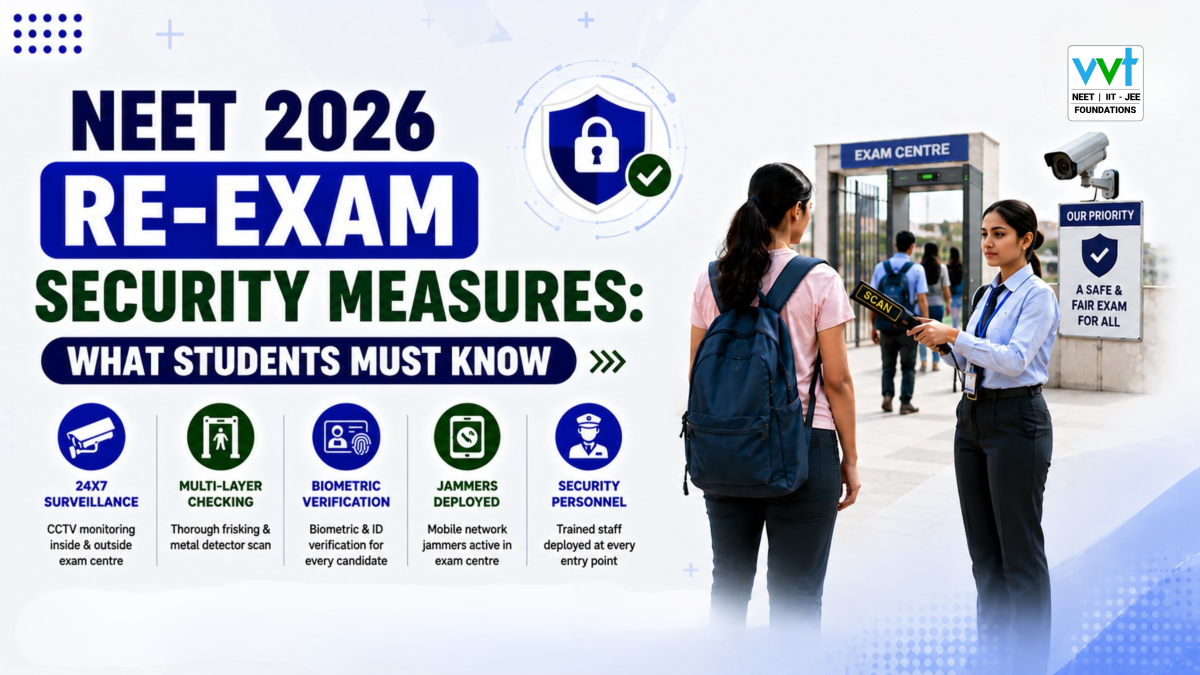
NEET 2026 Re-Exam Security Measures: What Students Must Know Before Entering the Exam Centre
The NEET 2026 re-exam is not just another test day. For many students, it feels like a second chance, a pressure situation, and a fresh opportunity all at once. Students have already prepared, already faced one exam cycle, and now they are expected to walk into the re-exam with confidence, discipline and complete awareness of the latest rules.
But this time, preparation is not only about Biology NCERT, Chemistry formulas and Physics numericals. Students also need to clearly understand the NEET 2026 re-exam security measures.
Why?
Because even a well prepared student can face unnecessary stress if they reach late, carry a prohibited item, wear something that creates extra checking, forget the required documents, or panic during biometric verification.
The National Testing Agency has announced multiple security and candidate related measures for the NEET UG 2026 re-exam. These include stricter frisking, biometric verification, CCTV monitoring, police supported movement of exam materials, official reporting channels for suspicious claims, and clear dress code and permissible item instructions.
At VVT Coaching Chennai, we always tell students one thing: your exam day performance starts before the first question. It starts with how calmly and correctly you enter the exam centre.
Why NEET 2026 re-exam security measures matter
Security rules are not meant to scare students. They are meant to protect fairness.
NEET is one of India’s most important entrance exams. Every mark matters. Every candidate deserves a fair environment. That is why NTA has introduced strict security checks for the re-exam, including document verification, frisking, biometric authentication and monitoring systems.
For students, the best approach is simple:
Do not fight the rules. Prepare for them.
If you know what will happen at the centre, you will not panic. You will know what to carry, what to avoid, when to reach, how to dress, and how to cooperate during checking.
That calmness can protect your mindset before the exam begins.
NEET 2026 re-exam date, timing and reporting schedule
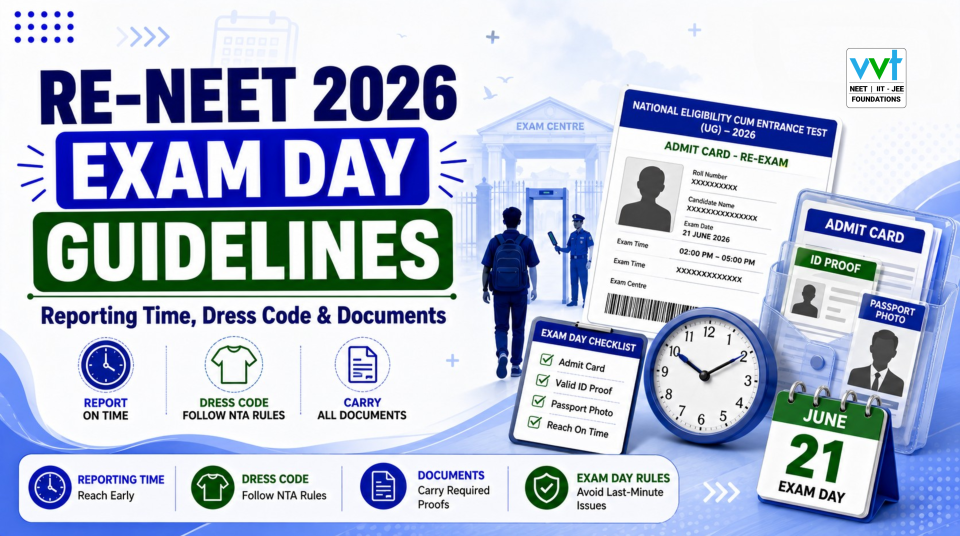
The NEET UG 2026 re-exam is scheduled for 21 June 2026. The exam timing is 2:00 PM to 5:15 PM.
Students must understand one important point: the 5:15 PM end time includes the revised examination window and formalities. So do not assume that you can reach late and still enter smoothly.
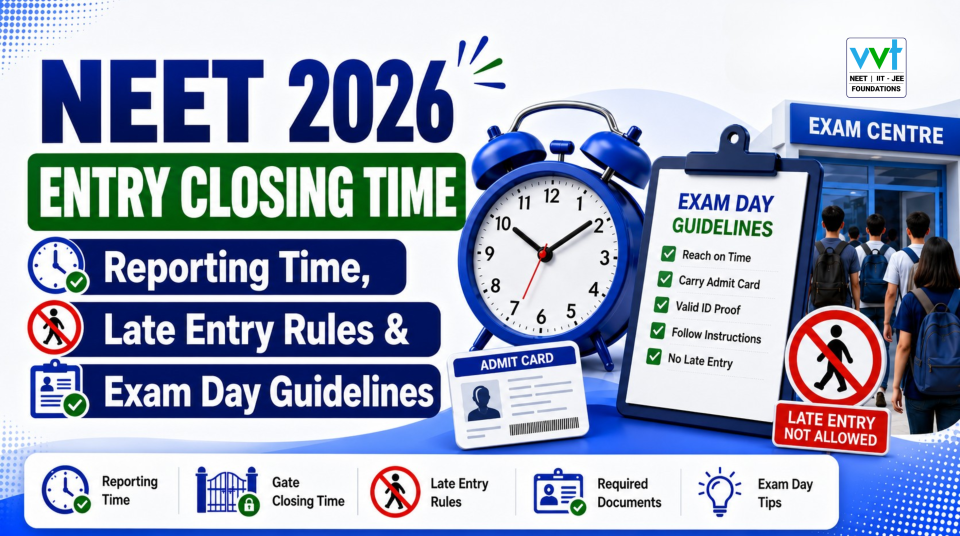
For the re-exam, candidates are advised to report to the exam centre between 11:00 AM and 1:30 PM. The entry gates will close at 1:30 PM sharp. After that, candidates will not be allowed to enter under any circumstances.
This is not a small instruction. It is one of the most important exam day rules.
Students should plan travel early, check the centre address from the admit card, and avoid depending only on map pins because some centres may not show accurately on map applications.
Multi layer security framework for NEET 2026 re-exam
NTA has announced a multi layered security framework for the smooth and fair conduct of the re-exam. This includes security at multiple levels, not just inside the exam hall.
The framework includes:
- secure handling of confidential examination materials,
- sealed protocols for movement of exam related materials,
- GPS enabled vehicles with police escort,
- CCTV surveillance at examination centres,
- centralised monitoring systems,
- mandatory frisking before entry,
- High sensitivity metal detectors,
- biometric authentication,
- and active monitoring of misinformation on social media platforms.
This shows that security is being handled from both sides: exam material safety and candidate verification.
For students, the practical meaning is simple: the exam centre process may take time. So cooperate with officials and avoid carrying anything unnecessary.
Biometric verification: what students should expect
Biometric verification is one of the key security measures for the NEET 2026 re-exam.
After frisking, candidates will have to undergo biometric verification before being allowed to enter the examination room. This may include fingerprint or facial recognition verification.
Students should not feel nervous about this. It is a normal identity verification process used to prevent impersonation and protect the fairness of the exam.
What if biometric verification fails?
This is a major concern for many students. Some students worry, “What if my fingerprint does not scan?” or “What if the machine does not work?”
NTA has provided an exception protocol for such cases.
If biometric verification cannot be completed due to device failure, poor biometric quality, connectivity issue, UIDAI server issue, or physical inability of the candidate to provide biometric data, the candidate may still be allowed to write the exam. In such cases, the candidate will have to sign a written undertaking at the exam centre.
Most importantly, candidates should not be disturbed during the active examination period for biometric processing. If needed, the process will be completed before the exam starts or after it ends.
Mandatory frisking and metal detector checks
All candidates will be subject to mandatory frisking before entry.
This may include checking through high sensitivity metal detectors. The purpose is to ensure that no prohibited electronic device, metallic item, communication device or unfair material enters the examination hall.
Students should not take frisking personally. Everyone will go through it. It is part of the exam security process.
What students should do
Wear simple clothes. Avoid unnecessary accessories. Do not carry anything extra. Keep only the permitted items. The smoother your preparation for security checking, the calmer your entry will be.
Dress code for NEET 2026 re-exam
NTA has issued specific instructions regarding dress code and permissible items for the re-exam.
Students should wear light clothing for the exam. If they need to wear full-sleeve garments or woollen clothing, they should reach the centre early so the staff can complete proper frisking.
Students may wear articles of faith, such as religious symbols, kalavas, turbans, hijabs, or similar items. However, they should report well in advance so the security staff can complete the checking process smoothly.
For footwear, slippers and low heeled footwear are preferred. Candidates wearing high heeled footwear may have to undergo additional checking.
What students should avoid wearing
Avoid:
- heavy jewellery,
- metallic accessories,
- large belt buckles,
- heavy clothing,
- complicated outfits,
- smart watches,
- metallic ornaments,
- and anything that may delay checking.
The best exam day dress is simple, comfortable and rule friendly.
Permitted items inside the NEET re-exam centre
Students are allowed to carry only permitted items into the examination hall.
As per the latest advisory, candidates are permitted to carry a transparent water bottle. They may also carry their admit card in a transparent plastic pouch to avoid damage due to rain.
Students should also carry:
- printed admit card,
- original valid photo ID,
- required passport size photographs,
- and any other document mentioned on the admit card.
Diabetic candidates may be permitted to carry sugar tablets and fruits such as banana, apple or orange, along with a transparent water bottle, in line with the official guidelines.
CCTV surveillance and centralised monitoring
NTA has also mentioned CCTV surveillance at all examination centres, with monitoring linked to centralised control rooms.
This means the exam environment will be closely observed to ensure fairness and discipline. Students should focus only on their paper and avoid any behaviour that could be misunderstood.
Inside the exam hall, stay focused only on your paper. Avoid unnecessary movements, do not talk to anyone, and never touch another student’s belongings. If invigilators are checking or moving around, stay calm and continue writing without panic.
This is normal during a high security examination.
NEET 2026 re-exam security checklist for students
Here is a simple checklist every student should follow:
| Security Area | What Student Should Do |
| Reporting time | Reach early, preferably well before gate closing |
| Admit card | Carry printed admit card and read all instructions |
| ID proof | Carry original valid photo ID |
| Photographs | Carry required passport size photos |
| Dress code | Wear simple, comfortable, rule friendly clothes |
| Footwear | Prefer slippers or low heeled footwear |
| Water bottle | Carry only transparent water bottle |
| Electronic items | Do not carry mobile, smartwatch, Bluetooth device or calculator |
| Jewellery/accessories | Avoid heavy jewellery, metallic items and large belt buckles |
| Biometric verification | Cooperate calmly with fingerprint/facial verification |
| Frisking | Follow staff instructions without argument |
| Rumours | Trust only official updates |
| Suspicious claims | Report fake leaks or fraudulent messages |
Common mistakes students must avoid
Reaching late
This is the biggest mistake. Security checks take time. Reach early.
Carrying extra items
Do not carry anything unnecessary. It can delay entry.
Ignoring dress code
Simple clothing helps security checking happen smoothly.
Depending on fake updates
Only official NEET/NTA updates should be trusted.
Panicking during biometric verification
If there is a technical issue, follow the centre instructions calmly.
Forgetting documents
Keep everything ready one night before.
Conclusion
The NEET 2026 re-exam security measures are strict, but students should not be afraid of them.
If you follow the rules, reach early, carry only permitted items, complete biometric verification calmly and avoid rumours, the security process will become manageable.
Remember this:
Security rules are not your enemy. Lack of preparation for security rules is the problem.
At VVT Coaching Chennai, our message to every NEET aspirant is simple:
Before the exam, focus on more than just revision. Make sure your syllabus is covered, your mind is calm, your documents are arranged, and you are ready to follow the security process without confusion.
Because on 21 June, your goal is not just to reach the centre.
Your goal is to enter the hall with confidence, write the paper with focus, and protect every mark you have worked for.
Also read: NEET UG Re-Exam 2026 Dress Code: What to Wear & Avoid
FAQs
What are the main security measures for NEET 2026 re-exam?
The main security measures include mandatory frisking, high sensitivity metal detector checks, biometric verification, CCTV surveillance, centralised monitoring, secure handling of exam materials, and strict control of prohibited items.
What items should students avoid carrying inside the NEET exam hall?
Students should not carry mobile phones, smart watches, Bluetooth devices, earphones, calculators, communication devices, wallets, heavy jewellery, metallic accessories, large belt buckles, or food packets inside the examination hall.
Can I carry a water bottle to the NEET re-exam centre?
Yes. Candidates are permitted to carry a transparent water bottle.
What is the reporting time for NEET 2026 re-exam?
Candidates are advised to report between 11:00 AM and 1:30 PM. Entry gates close at 1:30 PM sharp.