
How to Choose the Best NEET Coaching Centre: A Practical Checklist for Parents & Students
January 14, 2026
NEET UG 2026 Revision Timetable for the Last 90 Days: 3-Phase Plan + Daily Schedule + Mock & Error Strategy
January 20, 2026
NEET 2026 Expected Difficulty Level: Exam Analysis & Cut Off Trend
VVT Coaching Chennai – Ranked #1 Best NEET&JEE Coaching Centre by Times Now!
Students ask one question every year: “Will NEET 2026 be easy or tough?”
The honest answer is: NEET rarely becomes “easy” anymore.
What changes is how the difficulty shows up, sometimes through deeper NCERT-based Biology, sometimes through calculation-heavy Physics, sometimes through tricky Organic/Inorganic statement questions.
So instead of guessing, this blog gives you a clear, exam-real breakdown of:
- what “expected difficulty” actually means for NEET 2026
- subject-wise patterns students should prepare for
- why cut-offs can rise even if the paper feels tough
- and what to do right now to stay safe in marks and rank
NEET 2026 Expected Difficulty Level: What to Expect (No Panic, Just Reality)
Based on the recent direction of NEET papers, NEET 2026 is expected to be moderate to tough.
But “moderate to tough” does not mean every question will be hard.
It usually means:
- the easy questions remain easy (and must be secured with 100% accuracy)
- the moderate questions decide rank (students lose marks due to silly mistakes/time pressure)
- the tough questions decide top ranks (but you don’t need all of them for a great government seat)
So the correct mindset is not: “I hope the paper is easy.”
It is: “I will score even if the paper is tough.”
Subject-Wise NEET 2026 Exam Analysis (What Students Should Prepare For)
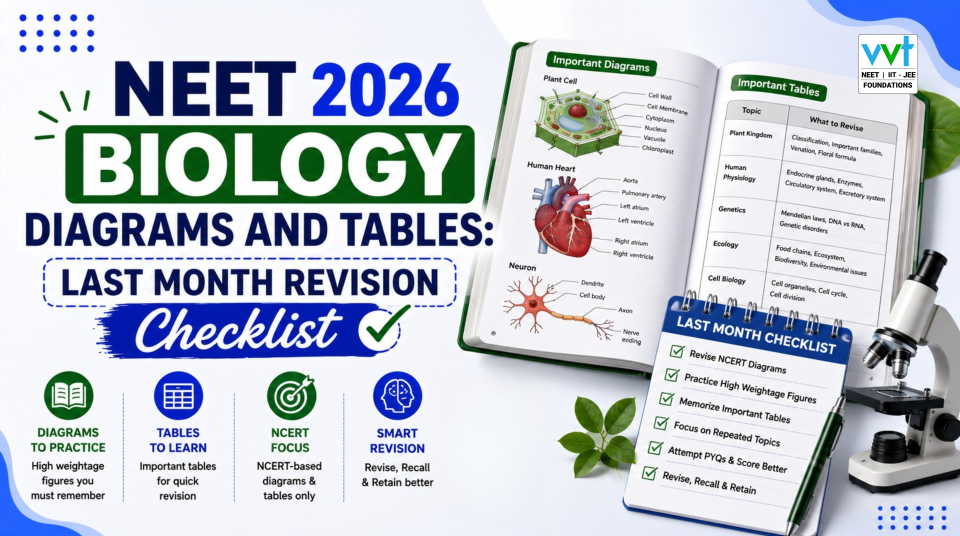
Biology: NCERT Depth + Statement Traps
Biology remains the biggest scoring engine—if your NCERT reading is solid.
The “difficulty” in Biology usually comes from:
- NCERT line-based statements where 2 options look correct
- confusing similar terms (examples: stages, hormones, cycles, diagrams)
- missing one keyword and choosing the wrong option
What wins in 2026:
Repeated NCERT revision + daily MCQs + an error notebook of “wrong NCERT lines.”
If you handle Biology correctly, it becomes your safest marks bank even in a tough year, which is why serious aspirants choose a structured system like VVT Coaching, the Best NEET Coaching CENTRE in Tamil Nadu,Chennai for many repeaters and toppers.
Chemistry: Faster Score Jumps (If You Avoid Random Study)
Chemistry difficulty usually depends on balance:
- Physical: formula + calculation speed (mistakes happen under pressure)
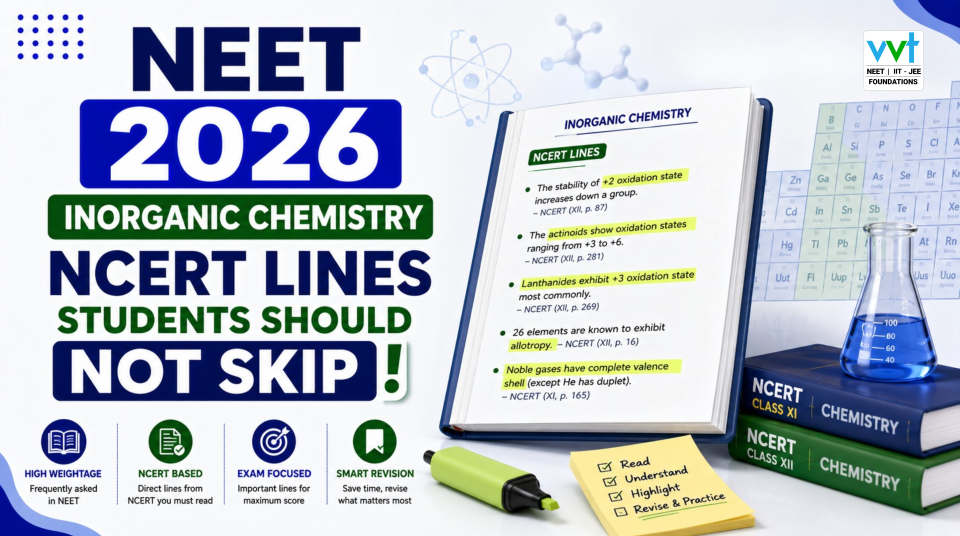
- Inorganic: direct NCERT lines + factual traps
- Organic: basics (GOC) decides everything—weak basics = confusing reactions
Most students don’t struggle because Chemistry is “hard.”
They struggle because they revise it late and practice it less.
What wins in 2026:
Weekly Chemistry tests + revision cycles + error-fix sets.
Physics: Time + Numericals + Accuracy Under Pressure
Physics often feels like the “tough section” because:
- questions consume more time
- calculations get lengthy
- one silly sign/unit mistake ruins a sure-shot question
Physics difficulty rarely comes from theory alone. It comes from execution.
What wins in 2026:
Timed practice, formula revision, and learning when to skip.
NEET 2026 Cut-Off Trend (Important Clarity Most Students Miss)
1) Qualifying Cut-Off vs Admission Cut-Off (Two Different Things)
Students confuse these two every year:
Qualifying cut-off: minimum level to be considered “qualified” for counselling participation.
Admission cut-off: marks needed to actually get MBBS/BDS/AQ seats (varies by state, category, round, seat availability).
So even if you “qualify,” you might still need more marks to secure a government seat.
2) Why Cut-Off Can Rise Even If the Paper Is Tough
This sounds confusing, but it happens because:
- competition keeps increasing
- more students score well due to better preparation resources
- Biology/NCERT heavy papers can still produce high marks
- small mistakes become the difference between 620 and 660
So the safest plan is not chasing the “expected cut-off.”
The safest plan is building a buffer score through accuracy + error elimination.
How to Prepare Smartly Based on Expected Difficulty
The “3-Part System” That Completes Syllabus AND Improves Marks
If you want to finish syllabus on time and score more, your plan must run in 3 tracks:
Learning (complete chapters)
Revision (repeat weekly)
Testing (topic tests → unit tests → full mocks)
If you only learn, you forget.
If you only test, you feel stuck.
If you combine all three, you finish the syllabus and your score rises.
A Simple Weekly Plan (No Burnout, Full Coverage)
A realistic weekly structure that keeps you ahead:
- 5 days: chapter completion + daily Bio
- 1 day: revision (short notes + NCERT + wrong questions)
- 1 day: test + deep analysis
This rhythm keeps pressure low and progress high.
How VVT Coaching Helps You Beat the Cut Off (Not Just Clear It)
Best NEET COACHING CENTRE in Tamil Nadu | Top NEET coaching Centre in Tamil Nadu
1) Personalised Guidance (Because Weakness Is Personal)
Some students forget Biology lines.
Some lose Physics marks due to calculation slips.
Some struggle in Organic because GOC is weak.
At VVT Coaching, each student gets mentor-led support to:
track weekly score growth, plan revision by priority, fix weak topics without panic, and stay consistent till NEET day with accountability.
2) AI-Powered Mock Tests & Smart Analytics (So Your Improvement Becomes Visible)
Most tests only give marks. That’s not enough.
VVT’s analytics show: chapter-wise accuracy, topic-wise weak areas, time spent per question, and repeated mistake patterns.
This means you stop guessing and start improving with proof, because in NEET, time + accuracy decide rank.
3) Remedy Classes (Targeted Fix Sessions, Not Full Re-Teaching)
Instead of repeating entire chapters again and again, Remedy Classes focus only on: the exact concepts where marks leak, and the exact question types where you lose time.
Each remedy session is followed by mini-tests to confirm improvement ,so weak topics get fixed faster and they stay fixed.
4) Error Exams & Weekly Fix-Ups (Where Most Score Jumps Happen)
Your wrong/skipped questions are converted into personalised Error Exams so:
The same mistakes stop repeating, your weak patterns become your strongest points, and confidence becomes automatic under time pressure.
This is one of the fastest ways to push your score up, because it attacks the exact reasons you’re losing marks.
Conclusion
NEET 2026 is expected to be moderate to tough, and the safest strategy is not waiting for “easy paper luck.”
The safest strategy is building a system that scores even when the paper is difficult: NCERT focus + weekly testing + error correction + revision cycles.
If you want structured preparation with mentorship, analytics, remedy classes, and error exams, VVT Coaching is ready.
Visit: vvtcoaching.com
Call: +91 81221 22333
Scholarships: Up to 100% via VVTSAT!
Get to Know VVT’s Three Friendly Campuses: Always Nearby and Welcoming
VVT has three spots across Chennai, each easy to reach and full of support. No matter where you live, one is close by. Our campuses mix bright classrooms, helpful teachers, and a warm feel to keep you going. Here’s a quick look at each, with a focus on how they help with NEET and staying options.
Adyar Campus: Easy Access and Positive Vibes
Right on busy L.B. Road next to Adyar Ananda Bhavan, this spot is super convenient. Step inside, and you’ll see big, airy rooms where learning feels fun. Staff greet you with smiles, and the energy pushes you to turn weak areas like tough Physics problems into strengths.We also offer hostel facilities here for boys, with clean rooms, meals, and support to make your stay comfortable and focused. No distractions, just a safe place to rest and review after classes.
Adyar Campus (VVT Coaching Centre): “Nibav Buildings”, 4th & 5th Floor, No.23, Old No.11, L.B. Road, Adyar, Chennai – 600020. (Next to Adyar Ananda Bhavan)
Get Directions: Open in google maps!
Anna Nagar Campus: Focus in the City Centre
In Shanthi Colony, Anna Nagar, this campus feels like an extension of home. Good bus links make it simple for city kids. There is no on-site hostel, but nearby options are plentiful for those who need them.
Anna Nagar Campus (VVT Coaching Centre): No.1621, 9th Main Road, Shanthi Colony, Block AI, Anna Nagar, Chennai – 600040.
Get Directions: Open in google maps!
Pallikaranai Girls Campus: Your Safe Place with Full Hostel
This is our special girls-only residential campus in a quiet area. It’s built as a true home away from home, with clean dorms, healthy meals in the canteen, and round-the-clock help.
We offer full hostel facilities here, clean rooms, study areas, and a community of girls supporting each other. It’s perfect if you’re from outside Chennai or just want a focused, safe space.
Pallikaranai (Saraswathi Girls Residential Campus): Plot No. 395 & 396, 1st Main Road, Kamakoti Nagar, Pallikaranai, Chennai – 600100.
Get Directions: Open in google maps!
FAQs
Q1) Will NEET 2026 be tough or easy?
NEET 2026 is expected to be moderate to tough. The smart plan is to prepare for tougher questions so you’re safe on any paper level.
Q2) Which subject usually feels toughest in NEET and why?
Often Physics feels toughest due to time + calculations. Biology feels tricky due to NCERT statements. Chemistry becomes difficult only when revision is weak.
Q3) Can cut-off rise even if the paper is tough?
Yes. Cut-off depends on competition and score distribution. That’s why accuracy and mistake control matters more than paper difficulty.
Q4) What is the best strategy if I want a safe government seat score?
Don’t aim for the minimum. Aim for a buffer score through mocks, analysis, and error exams so your rank stays safe even in a tough year.
Q5) How does VVT Coaching help students improve quickly?
Through mentor-led planning, AI-based mock analytics, remedy classes for weak areas, and personalised error exams that stop repeated mistakes.